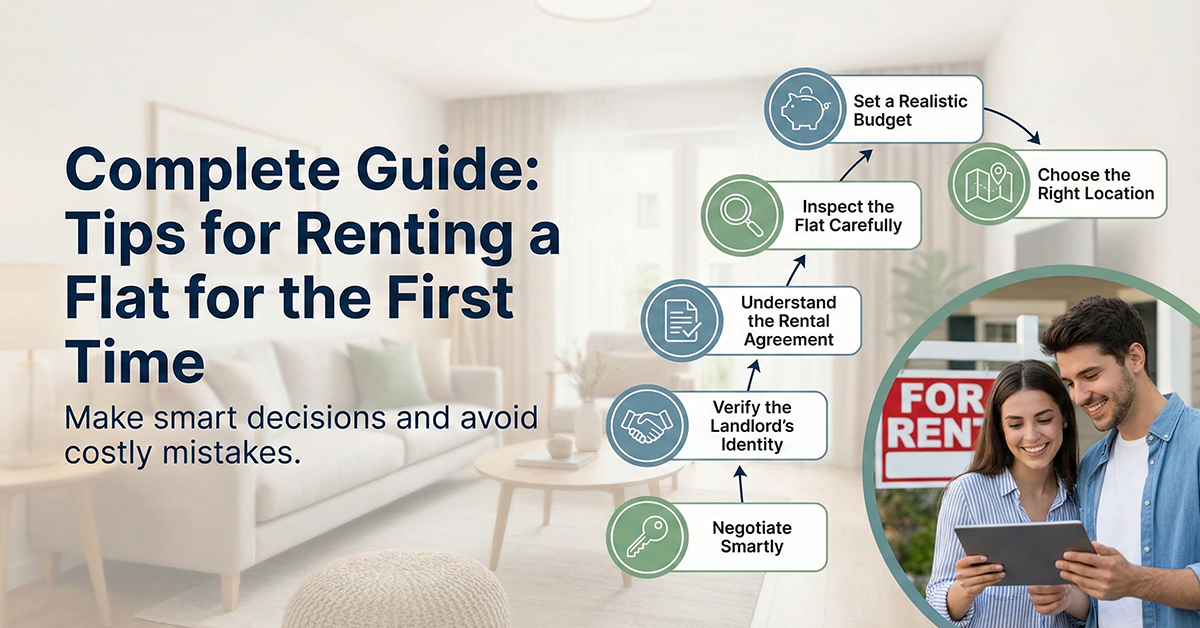
Renting your first flat is an exciting milestone, but it can also feel overwhelming. From budgeting to understanding rental agreements, there are several important factors to consider. This complete guide shares essential tips for renting a flat for the first time to help you make confident and informed decisions.
1. Set a Realistic Budget
Before starting your search, determine how much rent you can comfortably afford. Experts recommend following the 30% rule, meaning your rent should not exceed 30% of your monthly income.
- Security deposit
- Maintenance charges
- Utility bills
- Internet costs
- Moving expenses
Keep at least two to three months’ rent as emergency savings.
2. Choose the Right Location
Location significantly impacts your daily life. Consider convenience, safety, and accessibility before finalizing your rental flat.
- Distance to workplace or college
- Access to public transportation
- Nearby grocery stores and hospitals
- Safety of the neighborhood
- Parking availability
Visit the area during both daytime and nighttime to assess safety and surroundings.
3. Inspect the Flat Carefully
Never finalize a property without a proper inspection. Check plumbing, electrical fittings, ventilation, doors, windows, and signs of dampness or leakage.
Take photos or videos during inspection to avoid disputes about damages later.
4. Understand the Rental Agreement
The rental agreement is legally binding. Read every clause carefully before signing.
- Lease duration
- Notice period
- Security deposit terms
- Lock-in period
- Maintenance responsibilities
- Rent increase conditions
If needed, consult a legal expert before signing the agreement.
5. Verify the Landlord’s Identity
Ensure the landlord is the legal property owner. Ask for ownership proof and identity verification to avoid fraud or legal complications.
6. Check Society Rules and Restrictions
Many residential societies have specific rules regarding:
- Pets
- Guests
- Bachelor tenants
- Parking
- Noise regulations
Clarify these rules before moving in to prevent future issues.
7. Keep All Documents Ready
Landlords typically require the following documents:
- ID proof
- PAN card
- Passport-size photos
- Employment proof
- Police verification (in many cities)
8. Clarify Maintenance and Extra Charges
Ask clearly who is responsible for repairs and whether maintenance charges are included in the rent. Always confirm payment terms in writing.
9. Negotiate Smartly
Many first-time renters hesitate to negotiate, but it can save money.
- Monthly rent
- Security deposit amount
- Minor repairs before moving in
- Furniture inclusion
Polite negotiation is often welcomed by landlords.
10. Avoid Common First-Time Renting Mistakes
- Not reading the agreement properly
- Ignoring hidden charges
- Paying cash without receipts
- Skipping property inspection
- Not verifying landlord details
Final Thoughts
Renting your first home should be an exciting experience. By following these tips for renting a flat for the first time, you can avoid common mistakes and secure a safe, comfortable rental property.
Take your time, compare options carefully, and never rush into signing an agreement.
Frequently Asked Questions
How much security deposit is normal?
Typically, one to three months’ rent depending on the city and market conditions.
Can I negotiate rent?
Yes, rent negotiation is common in many markets, especially if the property has been vacant.
Is police verification required?
In many cities, police verification is mandatory for tenant safety and legal compliance.
Should everything be documented?
Yes. Always maintain written proof of payments and agreements to avoid future disputes.
Lorem ipsum dolor sit amet, consectetur adipiscing elit. Ut elit tellus, luctus nec ullamcorper mattis, pulvinar dapibus leo.