Introduction
Navi Mumbai has rapidly transformed into one of the most preferred residential destinations near Mumbai. Known for its planned infrastructure, wide roads, and growing job opportunities, it attracts both homebuyers and investors.
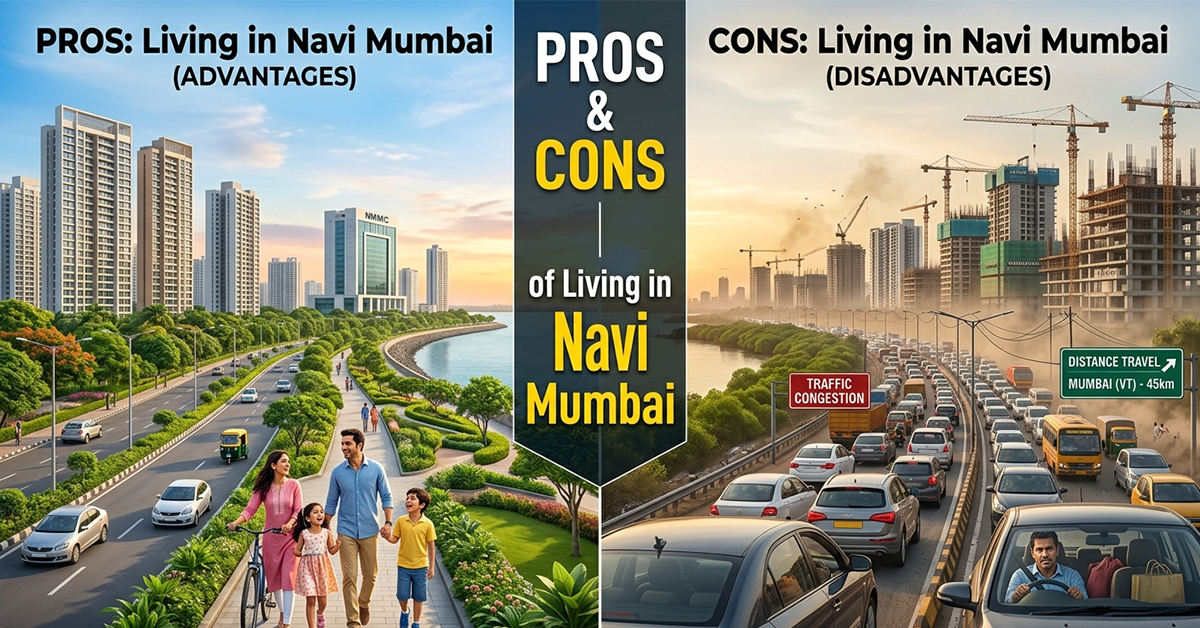
However, like any city, Navi Mumbai has its own set of pros and cons. In this blog, we’ll break down everything you need to know before deciding whether it’s the right place for you.
Pros of Living in Navi Mumbai
1. Planned Infrastructure & Better Living Standards
Unlike Mumbai’s congested layout, Navi Mumbai is a well-planned city developed by CIDCO. Areas like Vashi, Nerul, and Kharghar offer wide roads, organized sectors, and better civic amenities.
- Less congestion
- Cleaner surroundings
- Modern residential complexes
2. Excellent Connectivity
Navi Mumbai offers strong connectivity via rail, road, and upcoming infrastructure projects.
- Harbour Line & Trans-Harbour connectivity
- Palm Beach Road for fast travel
- Upcoming Navi Mumbai International Airport
3. Affordable Property Prices (Compared to Mumbai)
One of the biggest advantages is affordability. You get larger homes at a relatively lower price compared to Mumbai.
- Better price per sq. ft.
- More spacious apartments
- Higher ROI potential for investors
4. Growing Job Opportunities
Navi Mumbai is emerging as a business hub with IT parks, corporate offices, and industrial zones.
- Presence of IT parks in Mahape
- Commercial hubs in CBD Belapur
- Proximity to Thane & Mumbai job markets
5. Green Spaces & Better Environment
The city offers a healthier lifestyle with parks, hills, and less pollution.
- Central Park in Kharghar
- Parsik Hills
- Wide open spaces and greenery
Cons of Living in Navi Mumbai
1. Limited Nightlife Compared to Mumbai
If you enjoy vibrant nightlife, Navi Mumbai may feel quieter.
- Fewer late-night options
- Limited entertainment hubs
2. Public Transport Still Developing
While connectivity is good, internal transport in some nodes is still improving.
- Dependence on autos/cabs
- Limited last-mile connectivity in newer areas
3. Distance from South Mumbai
For people working in South Mumbai, daily travel can be time-consuming.
- Longer commute hours
- Crowded trains during peak time
4. Rapid Development = Construction Zones
Many areas are still under development, which can lead to:
- Noise and dust
- Temporary inconvenience
5. Social Infrastructure Varies by Area
While developed nodes have everything, newer sectors may lack:
- Schools
- Hospitals
- Shopping centers
Who Should Consider Living in Navi Mumbai?
Navi Mumbai is ideal for:
- First-time homebuyers
- Families looking for better lifestyle
- Investors seeking long-term growth
- Professionals working in Navi Mumbai or Thane
Navi Mumbai vs Mumbai – Quick Comparison
| Factor | Navi Mumbai | Mumbai |
|---|---|---|
| Property Prices | Affordable | Expensive |
| Infrastructure | Planned | Congested |
| Lifestyle | Peaceful | Fast-paced |
| Connectivity | Improving | Excellent |
Final Verdict
Navi Mumbai strikes a perfect balance between affordability, infrastructure, and lifestyle. While it may lack the buzz of Mumbai, it compensates with better living conditions and future growth potential.
If you’re planning to buy a home or invest in real estate in 2026, Navi Mumbai is definitely worth considering.
FAQs
Is Navi Mumbai a good place to live?
Yes, it offers a better quality of life, planned infrastructure, and affordability.
Is Navi Mumbai good for property investment?
Absolutely. With upcoming infrastructure like the airport, property prices are expected to rise.
Which is the best area in Navi Mumbai?
Popular areas include Kharghar, Nerul, Vashi, and Panvel.
Conclusion
Navi Mumbai is no longer just an alternative to Mumbai—it’s a destination in itself. Whether you’re a homebuyer or investor, understanding its pros and cons will help you make a smarter decision.